
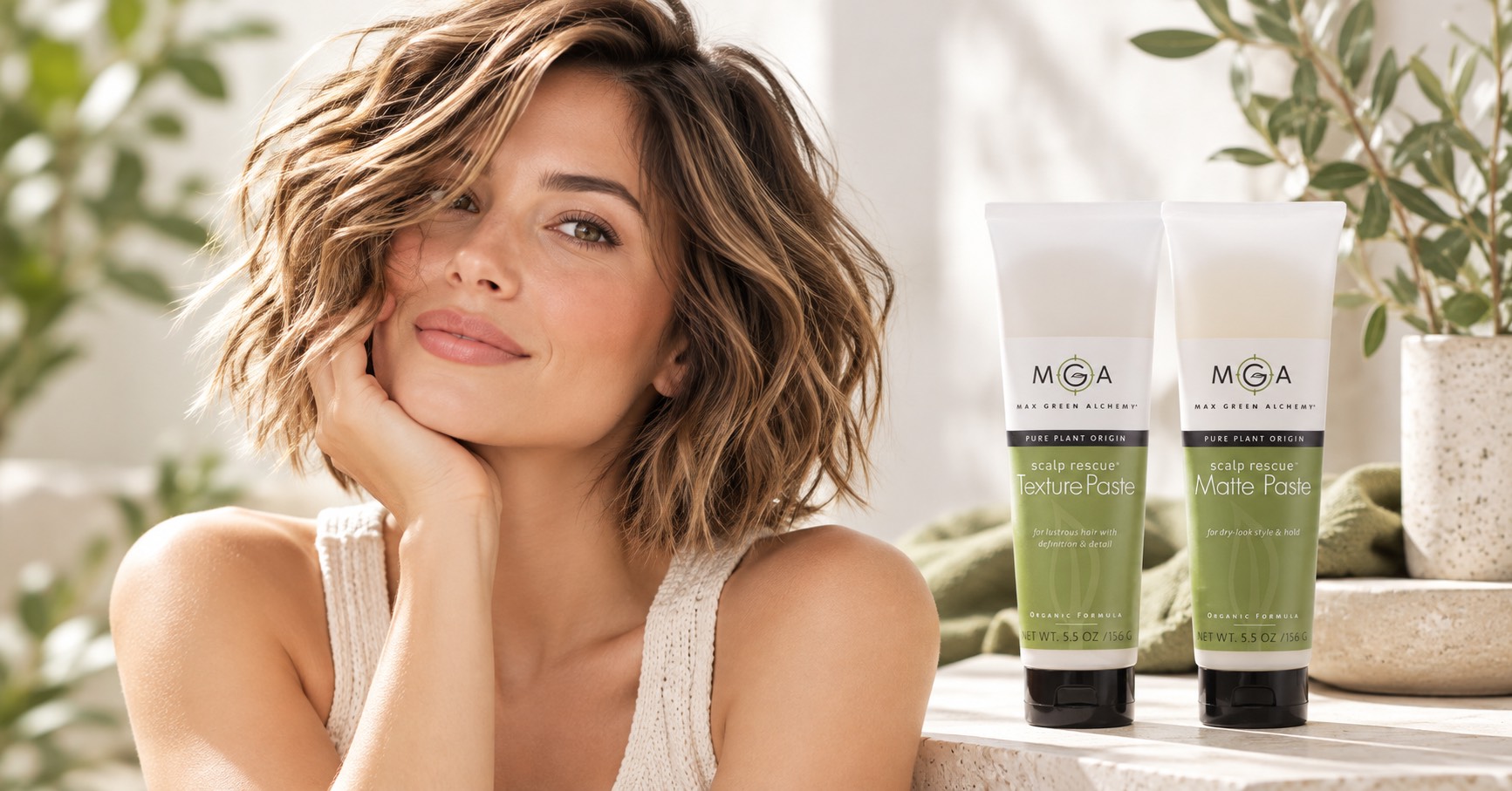
A great bob has an effortless quality about it: enough volume to keep it from falling flat, enough movement to stop it looking overly styled, and just the right amount of texture to give the cut definition.
That can be easier said than done, particularly if your hair is fine, straight or naturally prone to losing volume as the day goes on. The good news is that creating a fuller-looking textured bob doesn't necessarily require layers of styling products. Much of the effect comes from how you dry, direct and finish the hair.
Key Takeaways
- Start light. Heavy buildup can make a short bob fall flatter, particularly on fine hair.
- Create volume with technique first. The direction in which you dry the roots can make a noticeable difference before styling product is added.
- Don't aim for perfection. A little separation and irregular movement helps give a textured bob its relaxed, lived-in character.
- Use styling paste sparingly. Start with less than you think you need and build only where extra definition is required.
- Choose your paste by finish and hair needs. Texture Paste is the richer choice for flexible definition, softness and healthy-looking sheen; Matte Paste is the lighter, oil-free option for body, shape and a low-shine finish.
Why Does a Bob Sometimes Look Flat?
The shorter the haircut, the more noticeable the balance between shape, volume and product becomes.
Fine hair can sit close to the head because individual strands have less natural body. At the same time, using too much conditioner or styling product can make a shorter cut feel heavy surprisingly quickly. Even the way you dry your hair can encourage the roots to settle in their usual flat position.
That's why a good textured bob routine starts with technique rather than simply adding more product.
The aim isn't necessarily to make the hair look dramatically bigger. It's to create a little lift at the roots, movement through the lengths and separation at the ends so the shape of the haircut can be seen.
1. Start With a Light, Clean Foundation
If you want a bob to have movement, start by making sure the hair isn't carrying more product than it needs.
That doesn't mean you need to avoid every moisturizing or volumizing formula. Hair is individual, and what works beautifully for one person may feel too rich for another. The important thing is to notice how your own hair responds.
If fine hair regularly feels flat immediately after washing, consider whether your shampoo, conditioner or leave-in products are leaving more weight behind than your particular hair needs.
A gentle cleanser such as Max Green Alchemy Scalp Rescue Shampoo is a useful starting point when you want hair to feel clean, light and responsive before styling.
After washing, blot rather than aggressively rub your hair with a towel. A soft microfiber towel or cotton T-shirt can help remove excess water with less friction.
If you're going to use heated styling tools, apply your usual heat-protection product according to its directions before you start.
2. Create Root Lift Before Reaching for Styling Product
One of the easiest ways to make a bob look fuller is to change the direction in which the roots dry.
Hair naturally wants to fall in its familiar position. If you always dry it straight down in that direction, you're effectively encouraging it to lie flatter.
Instead, use your fingers or a brush to move the roots gently from side to side as you dry. You can also dry sections briefly in the opposite direction from the way they will eventually sit.
Once the roots are mostly dry, return the hair to its normal position. This simple change of direction can create lift without requiring a large amount of product at the scalp.
For extra volume at the crown, lift sections away from the head while directing the airflow toward the roots. Keep the dryer moving rather than concentrating heat in one spot.
3. Add Movement Rather Than Trying to Make Every Section Perfect
A textured bob shouldn't necessarily look identical from one section to the next. In fact, small variations are part of what make the style work.
If you're using a round brush, lift the section slightly away from the scalp and create a gentle bend rather than a perfectly curled finish. Alternating the direction of that bend through different sections can prevent the bob from looking overly uniform.
You can also create movement largely with your fingers, especially if your hair already has some natural wave or texture. Try twisting or scrunching a few sections while drying, then allow them to fall back into place.
Once the hair is dry, resist the temptation to brush everything smooth again. Use your fingers instead. The goal is separation and movement, not perfect polish.
4. Add Definition With Texture Paste
Once you've created the shape and movement, this is where a styling paste can make the difference.
Max Green Alchemy Scalp Rescue Texture Paste is the richer of our two styling pastes. Its formula combines flexible styling ingredients with jojoba oil, grapeseed oil, shea butter and other emollients, making it particularly useful when you want definition without sacrificing softness.
Rather than coating the whole head, begin with a very small amount. Warm it thoroughly between your fingertips or palms first. This makes the paste easier to distribute and helps prevent one section from receiving too much product.
Then concentrate on the areas where you want extra definition. For a bob, that will often mean the ends, a few face-framing sections and selected pieces through the top layers.
Pinch small sections between your fingers, twist individual ends or lightly rake your fingers through the hair. You're not trying to make every strand textured. Leaving some sections softer while defining others creates the dimension that makes a bob look naturally piece-y rather than heavily styled.
Because Texture Paste has a richer, more conditioning base, very fine hair usually needs only a tiny amount. Start small and add more only if you need it.
Texture Paste or Matte Paste: Which Is Better for Your Bob?
Both can work beautifully on short hair, but the formulas are deliberately quite different.
Choose Texture Paste for flexible definition, softness and sheen
Texture Paste is the richer option.
Alongside its styling ingredients, it contains jojoba oil, grapeseed oil and shea butter. That makes it especially useful when you want to define individual pieces while keeping the hair feeling pliable and adding a healthy-looking sheen.
It's a particularly good fit when your bob feels dry, coarse, wavy or frizz-prone, or when you want the ends to look polished rather than very matte.
Think:
- Piece-y separation
- Flexible definition
- Softness and pliability
- Healthy-looking sheen
- A richer feel
Fine hair can absolutely use Texture Paste too, but this is one of those products where a very small amount can go a long way.
Choose Matte Paste for body, texture and minimal shine
Max Green Alchemy Scalp Rescue Matte Paste takes a different approach.
It's oil-free and uses a lightweight starch-based styling system to create texture and flexible shape without adding the richer emollient feel of Texture Paste.
That makes it especially appealing when your priority is body and definition but your hair becomes weighed down easily.
Think:
- Body and fullness
- Lightweight texture
- Flexible shape
- Matte, low-shine finish
- Particularly useful for fine hair and shorter styles
You don't necessarily need both.
If your bob already has enough body but needs softness and individual pieces defined, Texture Paste may be the better fit. If your hair tends to be fine, soft or flat and you want texture without additional oils or sheen, Matte Paste is likely to make more sense.
How Much Styling Paste Should You Use on Short Hair?
Probably less than you think.
With shorter styles, the difference between definition and heaviness can be surprisingly small.
Begin with around a pea-sized amount—or even less if your hair is very fine—and warm it thoroughly between your hands.
Apply that first amount before deciding whether you need more. It's much easier to add another tiny amount than to remove excess product once it has been worked through the hair.
Another useful trick is to avoid starting at the front of your hairstyle. Begin toward the back or underneath, where any excess product is less noticeable, and move forward once most of the paste has left your hands.
By the time you reach the face-framing pieces, your fingers should have only a small amount remaining.
This is particularly important with Texture Paste because its oils and butters give it a richer feel. Matte Paste is lighter, but even then, short hair rarely benefits from applying more product than it actually needs.
How to Give Fine Hair More Volume Without Making It Stiff
When fine hair needs volume, there's a temptation to keep adding products.
Often, a better approach is to use styling technique for the volume and product only for the finishing detail.
Create lift while drying the roots. Avoid overworking the hair once you've created movement. Then choose the finishing product according to what the hair still needs.
If it needs separation and a touch of softness, use a tiny amount of Texture Paste. If it needs body and shape without added shine or oil, Matte Paste may be the better choice.
This allows the hair to keep some flexibility. A textured bob generally looks most modern when you can still see the hair move.
How to Refresh a Textured Bob the Next Day
You don't necessarily need to start again from scratch the following morning.
First, use clean fingers to loosen the roots and reshape the hair. Changing your part slightly or lifting the hair at the crown can sometimes restore a surprising amount of volume.
If certain sections have lost their definition, dampen your fingertips very slightly and reshape them. You can then use the tiniest trace of your chosen paste to rework only the pieces that need attention.
If you originally used Texture Paste, remember that yesterday's oils and emollients haven't simply disappeared. Avoid automatically adding another full application. Likewise, Matte Paste can usually be refreshed with your fingers before you decide whether any more product is needed.
Continually layering styling products eventually takes away the lightness and movement you're trying to preserve.
Common Mistakes That Can Make a Bob Look Flatter
Using too much styling product
More product doesn't automatically mean more texture. On fine or short hair, it can quickly have the opposite effect.
Choosing the wrong finish for your hair
A richer paste can be wonderful for softness and separation but may be more than very fine hair needs. Conversely, someone with coarse or dry hair may prefer the more emollient feel of Texture Paste to a purely matte finish. Choose according to your hair and the result you want.
Applying paste before warming it properly
Concentrated product is harder to distribute and can leave individual sections feeling overloaded.
Putting the same amount everywhere
Texture looks more natural when product is strategically placed rather than spread uniformly through the entire hairstyle.
Drying the roots only in their natural direction
Moving them in different directions during drying is one of the simplest ways to encourage lift.
Brushing out the texture at the end
Once you've created movement and separation, finish with your fingers instead of smoothing everything back together.
A Textured Bob Should Still Feel Like Your Hair
Perhaps the most important point is that a textured bob doesn't need to look heavily styled.
The haircut provides the shape. Drying technique creates much of the volume. Styling paste should simply help you emphasize the parts you want people to notice.
And choosing the right paste matters more than simply using more of it.
Texture Paste gives you a richer route to flexible definition, softness and healthy-looking sheen. Matte Paste is the lighter, oil-free option when you want body, shape and a low-shine finish.
A little lift at the roots, some irregular movement through the lengths and selective definition around the ends can be enough to transform a bob that feels flat into one that looks fuller and more dimensional.
If you wear your hair even shorter, our guide to styling short hair for volume and movement has more tips specifically for pixie cuts and cropped styles.
FAQs
How can I add volume to a short bob?
Start by concentrating on the roots while drying. Move the hair in different directions and briefly dry it opposite to the way it naturally falls before returning it to its usual position. Use styling paste after you've created the volume rather than relying on product to create all the lift.
What's the difference between a textured bob and a layered bob?
Layers describe the structure of the haircut: sections are cut at different lengths to influence shape, weight and movement. Texture describes the visual effect and can come from the haircut, the natural character of the hair, styling—or a combination of all three. A bob can therefore be layered, textured, both, or neither.
What's the best way to create movement in a bob?
You can create movement while blow-drying by changing the direction of different sections, using a round brush for gentle bends or encouraging existing wave with your fingers. Once dry, use a small amount of styling paste on selected pieces rather than coating the entire hairstyle.
Is Texture Paste suitable for fine hair?
Yes, but fine hair generally needs very little. Texture Paste contains jojoba and grapeseed oils plus shea butter, giving it a richer, more emollient feel. Start with a tiny amount and concentrate it mainly through selected ends and pieces rather than applying it throughout the whole hairstyle.
Is Matte Paste better for fine hair?
It can be an excellent choice when fine hair needs body, texture and shape without added oil or shine. Matte Paste is oil-free and has a lighter styling base than Texture Paste, making it particularly useful when avoiding extra weight is a priority.
Should I use Texture Paste or Matte Paste on my bob?
Choose according to your hair and the finish you want. Texture Paste is better suited to flexible separation, softness and healthy-looking sheen. Matte Paste is designed for lightweight body, shape and a matte, low-shine finish. You don't need to use both.
How do I stop a textured bob from looking over-styled?
Use styling products selectively, keep some areas softer than others and finish with your fingers instead of brushing everything into a uniform shape. Slight irregularity is what gives a textured bob much of its relaxed character.
Tagged Products


